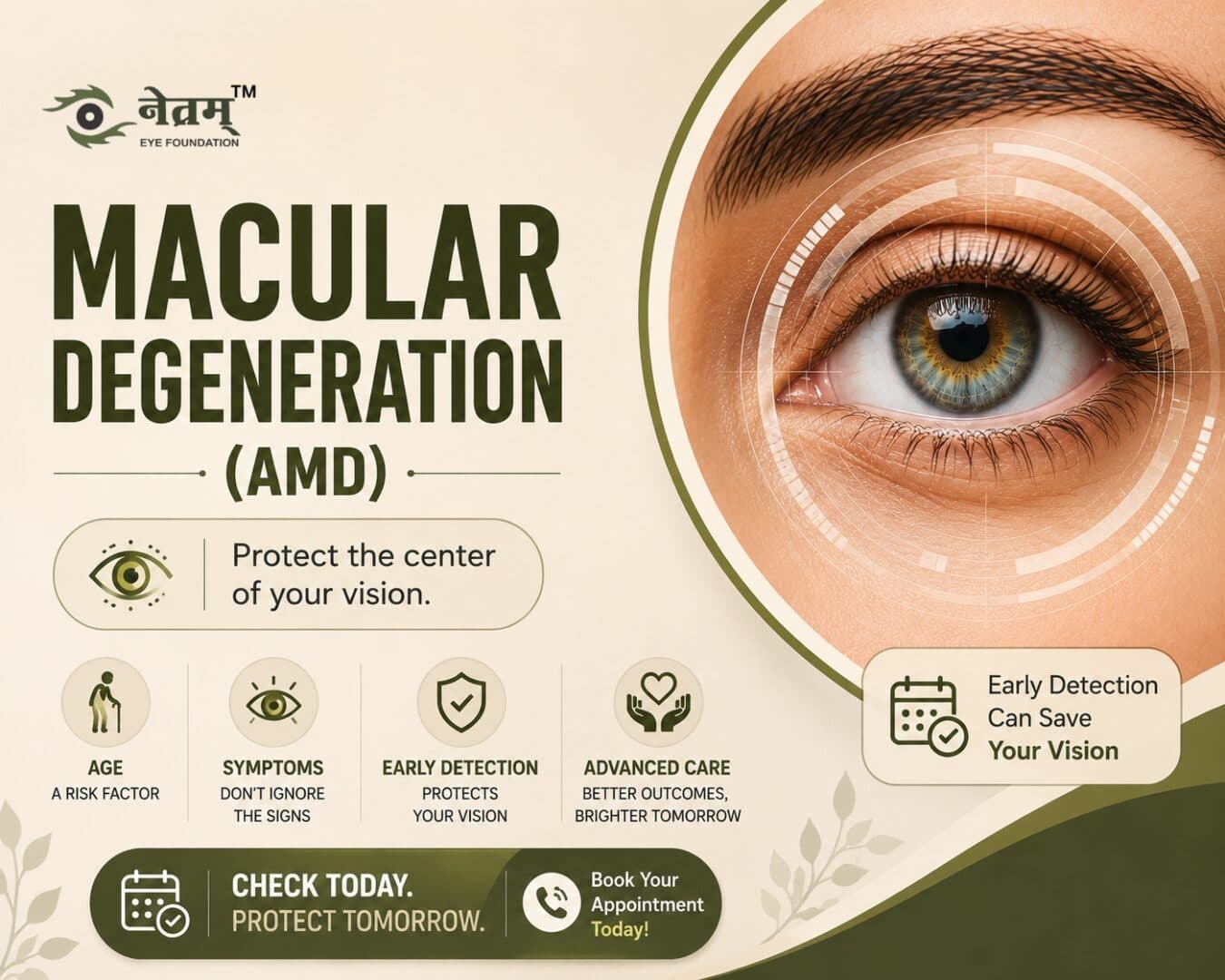
Age-Related Macular Degeneration (AMD): Causes, Symptoms & Treatment Options
Age-Related Macular Degeneration (AMD) is a leading cause of vision loss among individuals aged 50 and older. It affects the macula, the central part of the retina responsible for sharp, detailed vision needed for activities like reading, driving, and recognizing faces. While the condition can be life-altering, understanding its causes, symptoms, and treatment options empowers patients to take proactive steps to preserve their eyesight.
What is Age-Related Macular Degeneration (AMD)?
AMD is a progressive eye disease that damages the macula, leading to a gradual or sudden loss of central vision. Importantly, it does not affect peripheral vision, meaning people rarely go completely blind from it. Instead, it creates a blurry or blind spot in the center of the visual field, significantly impacting the ability to perform everyday tasks.
Types of AMD: Dry vs. Wet
AMD is broadly classified into two types, each with distinct characteristics and progression rates.
| Feature | Dry AMD (Non-neovascular/Atrophic) | Wet AMD (Neovascular/Exudative) |
| Prevalence | The most common form, accounting for about 80-90% of cases. | Less common, occurring in about 10% of cases. |
| Cause & Progression | Caused by the gradual breakdown of light-sensitive cells in the macula and the buildup of yellow deposits called drusen. Progression is typically slow and gradual. | Caused by the growth of abnormal, fragile blood vessels beneath the retina. These vessels leak fluid and blood, leading to rapid damage. This is a more aggressive form and a major cause of severe vision loss. |
| Vision Loss | Gradual loss of central vision over years. | Sudden and severe loss of central vision, often occurring over days or weeks. |
Primary Causes and Risk Factors
While the exact cause of AMD is unknown, a combination of genetic and environmental factors contributes to its development. The primary risk factors include:
- Age: The most significant risk factor. The prevalence of AMD increases markedly after age 65.
- Smoking: Tobacco use is the most important modifiable risk factor. Smokers are 2 to 4 times more likely to develop AMD.
- Family History: Genetics play a crucial role. Having a close family member with AMD increases your risk.
- Cardiovascular Conditions: High blood pressure, heart disease, and a diet high in saturated fat are associated with a higher risk of AMD.
- Diet & Lifestyle: A diet low in antioxidants and rich in processed foods can increase the risk.
Recognizing the Symptoms of AMD
The symptoms of AMD can vary depending on the type. Many people with early-stage AMD do not experience noticeable symptoms.
Common symptoms of Dry AMD include:
- A gradual loss of detail or blurriness in central vision.
- Difficulty reading smaller print or recognizing faces.
- Needing brighter light for tasks like reading.
- The appearance of drusen, which are visible to an eye doctor during an exam.
Common symptoms of wet AMD include:
- Metamorphopsia: Straight lines (like doorframes or telephone poles) appearing wavy or distorted.
- A blurry or wavy area in the center of your vision.
- A dark, empty area or blind spot in the center of your vision (central scotoma).
- Rapid vision loss, often in just one eye.
⚠️ Don’t ignore early signs of retinal issues—clear vision starts with timely care. If you notice any changes in your central vision, distortion, or sudden blurriness, schedule an eye examination immediately. Early intervention can make a significant difference in preserving your eyesight.
How is AMD Diagnosed?
Early detection is crucial for managing AMD effectively. An eye care professional can diagnose the condition through a comprehensive eye exam, which may include the following tests:
- Visual Acuity Test: Measures how well you see at various distances using a standard eye chart.
- Dilated Eye Exam: Eye drops are used to widen (dilate) the pupil, allowing the doctor to get a clear view of the retina and macula to look for drusen or other signs of damage.
- Amsler Grid Test: This simple at-home and in-office test uses a checkerboard-like grid to detect wavy, blurry, or missing areas in your vision. A distorted grid is a key sign of wet AMD.
- Optical Coherence Tomography (OCT): This is a non-invasive imaging test that takes detailed cross-sectional pictures of the retina. It helps identify fluid under the retina, a hallmark of wet AMD, and monitor its response to treatment.
- Fluorescein Angiography (FA): For suspected wet AMD, a dye is injected into a vein in the arm. As the dye passes through the blood vessels in the eye, a special camera takes photos to identify any leaking, abnormal blood vessels.
Modern Treatment Options for AMD
While there is currently no cure for AMD, there are effective treatments to slow its progression, manage symptoms, and, in the case of wet AMD, prevent further vision loss.
Treatment for Dry AMD
- AREDS2 Supplements: For individuals with intermediate to advanced dry AMD, taking a specific high-dose formula of vitamins and minerals known as the AREDS2 formula can reduce the risk of progression to advanced stages by about 25%. The recommended formula typically includes:
- Lutein (10 mg) and Zeaxanthin (2 mg)
- Vitamin C (500 mg)
- Vitamin E (400 IU)
- Zinc (80 mg) and Copper (2 mg)
- Important: It is essential to avoid formulas with beta-carotene if you are a current or former smoker, as it increases the risk of lung cancer.
- Photobiomodulation (PBM): This treatment uses specific wavelengths of light to stimulate cellular function in the retina and has been shown to provide modest visual improvements for some patients with early or intermediate dry AMD.
- Complement Inhibitors: For advanced dry AMD with geographic atrophy, a severe form of the disease, new injectable medications like pegcetacoplan and avacincaptad pegol can slow the progression of retinal tissue loss.
Treatment for Wet AMD
The main goal of treating wet AMD is to stop the growth and leakage of abnormal blood vessels.
- Anti-VEGF Injections: This is the first-line treatment for wet AMD. Vascular endothelial growth factor (VEGF) is a protein that promotes the growth of abnormal blood vessels. Anti-VEGF medications (such as ranibizumab, bevacizumab, aflibercept, and faricimab) are injected directly into the vitreous (the jelly-like substance in the eye) to block this protein. These injections can substantially reduce the risk of vision loss and, in some cases, even improve vision. They are typically given on a regular schedule, which can range from monthly to every few months.
- Emerging Therapies: The future of wet AMD treatment is promising.
- Gene Therapy: This innovative approach aims to reduce the treatment burden by delivering a gene into the eye that continuously produces an anti-VEGF protein. This is designed to reduce the need for frequent injections. Clinical trials with therapies like ixo-vec and 4D-150 are showing positive results.
- Laser Therapy: In some cases, a laser (photodynamic therapy) may be used to seal leaking blood vessels. This is less common now that anti-VEGF injections are available.
Lifestyle and Supportive Measures
In addition to medical treatments, lifestyle changes are critical in managing AMD.
- Smoking Cessation: Stopping smoking is the single most effective step you can take to prevent AMD and slow its progression.
- Diet and Nutrition: Embracing a Mediterranean diet rich in fish, dark leafy greens (like kale and spinach), fruits, and nuts while limiting red meat and processed foods has been shown to reduce the risk of AMD progression by 30-40%.
- Low Vision Aids: For those who have already experienced significant vision loss, tools such as magnifiers, specialized glasses, and electronic devices can help maximize remaining vision and maintain independence.
Expert Care at Netram Eye Foundation
At Netram Eye Foundation, you get expert care and advanced surgical solutions under the guidance of our specialist Retina Surgeon, Dr. Ishita Jain. With a patient-centric approach and cutting-edge technology, we are committed to preserving and restoring vision for individuals with retinal conditions like AMD.
📍 Book your consultation today and take the first step toward clearer, healthier vision.
Frequently Asked Questions (FAQ)
- What is the main cause of AMD?
While the exact cause is not known, the primary risk factors are advanced age, genetics, and smoking. The disease involves the breakdown of the macula, the central part of the retina responsible for fine vision. - What are the first signs of macular degeneration?
Early signs often include a gradual blurring of central vision, difficulty reading fine print, and needing brighter light to see clearly. An eye doctor may also detect drusen (yellow deposits) in the retina before you notice any symptoms. - Can you recover from macular degeneration?
There is currently no cure for AMD, and damage to the macula cannot be reversed. However, treatments can slow the progression of the disease, especially for wet AMD, helping to preserve the vision you have and prevent further loss. - What is the best treatment for AMD?
Treatment depends on the type of AMD. For dry AMD, the best approach is lifestyle changes (healthy diet, quitting smoking) and AREDS2 supplements for intermediate stages. For wet AMD, the standard of care is intravitreal injections of anti-VEGF medications. - How fast does AMD progress?
The progression varies. Dry AMD typically progresses slowly, over years. Wet AMD, however, can cause rapid and severe central vision loss, sometimes within days or weeks, requiring urgent treatment. - What is the difference between dry and wet AMD?
Dry AMD is more common and progresses slowly due to the thinning of the macula and the buildup of drusen. Wet AMD is less common but more aggressive, involving the growth of abnormal, leaky blood vessels under the retina, which leads to faster and more severe vision loss.
Conclusion
Age-related macular degeneration is a complex eye condition that poses a significant threat to vision in older adults. However, with early detection through regular eye exams, proactive lifestyle changes, and cutting-edge treatments, its impact can be managed effectively. Staying informed and working closely with your eye care professional are your best strategies for maintaining healthy vision for years to come.