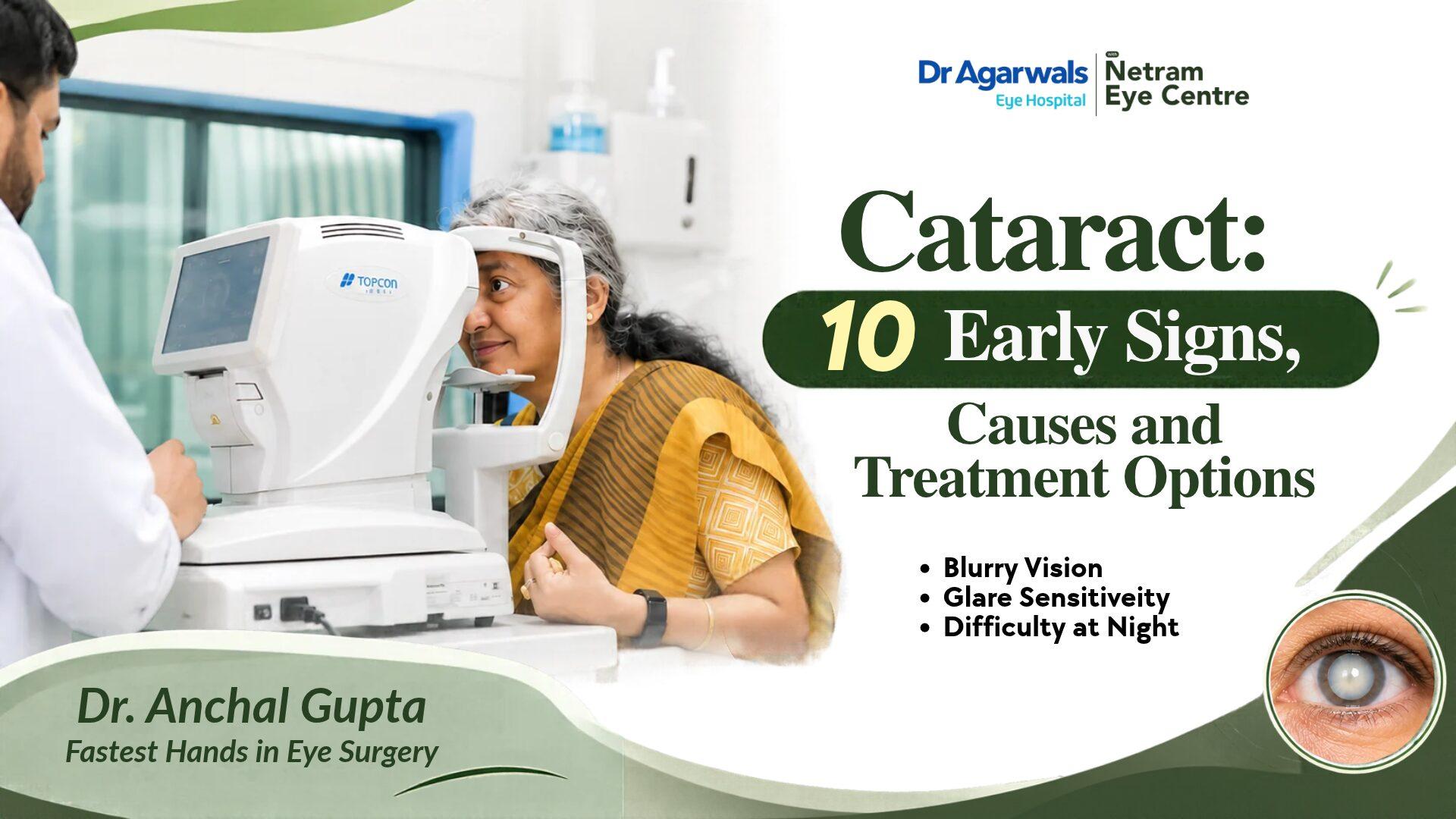
Cataracts are one of the most common age-related eye conditions that can gradually affect vision. A cataract develops when the natural lens of the eye becomes cloudy, making it difficult to see clearly. Although cataracts are more common with ageing, they can also occur due to diabetes, eye injuries, certain medications and other health conditions.
Recognising the early signs of cataracts and seeking timely medical advice can help protect your vision and maintain your quality of life.
10 Early Signs of Cataracts You Should Not Ignore
Cataracts usually develop slowly. Some common warning signs include:
- Blurry or Cloudy Vision: Objects may appear hazy, foggy or less clear than before.
- Difficulty Seeing at Night: Driving or walking in low-light conditions may become challenging.
- Increased Sensitivity to Light: Bright sunlight, headlights and indoor lights may cause discomfort.
- Halos Around Lights: You may notice rings or halos around light sources.
- Faded Colours: Colours may appear dull, yellowish or less vibrant.
- Frequent Changes in Spectacle Prescription: You may need repeated changes in your glasses due to changing vision.
- Double Vision in One Eye: Cataracts can sometimes cause double or overlapping images.
- Difficulty Reading: Reading small text or performing close-up activities may become difficult.
- Poor Contrast Sensitivity: It may become harder to distinguish objects against similar backgrounds.
- Frequent Glare: Bright lights may interfere with daily activities and visual comfort.
If you experience these symptoms, consult an eye specialist for a comprehensive eye examination.
What Causes Cataracts?
Several factors can increase the risk of developing cataracts:
- Ageing: The natural lens becomes less transparent with age.
- Diabetes: High blood sugar levels can increase the risk of cataract development.
- UV Exposure: Long-term exposure to ultraviolet radiation may contribute to cataract formation.
- Eye Injuries: Trauma or previous eye surgery can increase the risk.
- Certain Medications: Long-term use of corticosteroids may contribute to cataracts.
- Smoking: Smoking is associated with an increased risk of cataracts.
- Family History: Genetics may also influence cataract risk.
What Are the Treatment Options for Cataracts?
In the early stages, an updated spectacle prescription and improved lighting may help manage certain visual difficulties.
However, when cataracts begin affecting daily activities, an ophthalmologist may recommend cataract surgery.
Modern Cataract Surgery
Cataract surgery involves removing the cloudy natural lens and replacing it with an artificial intraocular lens (IOL).
Depending on individual eye health and visual requirements, different lens options may be recommended:
- Monofocal IOL
- Multifocal IOL
- Toric IOL
- Extended Depth of Focus (EDOF) IOL
Your eye surgeon will recommend the most suitable option after a detailed eye evaluation.
How Can You Reduce the Risk of Cataracts?
Although cataracts cannot always be prevented, certain healthy habits may support long-term eye health:
- Wear UV-protective sunglasses outdoors.
- Maintain healthy blood sugar levels.
- Eat a balanced diet rich in fruits and vegetables.
- Avoid smoking.
- Schedule regular eye examinations.
- Seek medical advice if you notice changes in vision.
Choosing the Best Eye Hospital for Cataract Treatment in Delhi
Choosing the right eye hospital is important for safe and effective cataract care. Look for experienced cataract surgeons, advanced diagnostic facilities, modern surgical technology and personalised treatment recommendations.
If you are searching for the Best Eye Hospital in Delhi, Best Cataract Surgeon in Delhi or an experienced Best Eye Doctor in Delhi, consider clinical expertise, available treatment options and the quality of patient care.
At Netram Eye Foundation, we believe in promoting eye health awareness and encouraging timely eye examinations.
Conclusion
Cataracts can gradually affect everyday activities, but timely diagnosis and appropriate treatment can help restore clearer vision. Do not ignore early warning signs such as cloudy vision, glare or difficulty seeing at night.
Prioritise your eye health and consult an eye specialist if you notice changes in your vision.
Book an eye examination at Netram Eye Foundation and take the first step towards healthier vision.
Disclaimer: This article is for general educational purposes and does not replace professional medical advice, diagnosis or treatment.