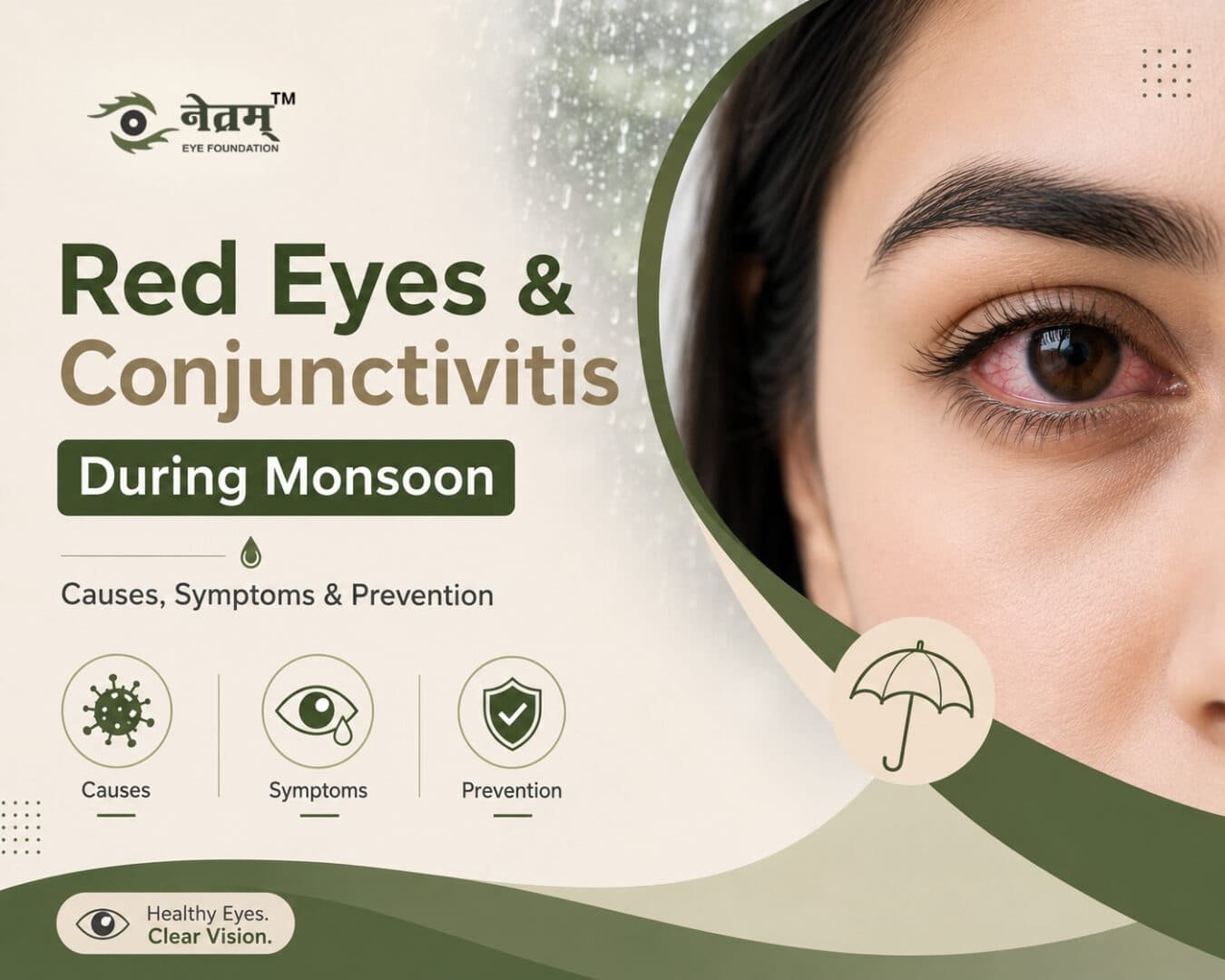
Red Eyes & Conjunctivitis During Monsoon: Causes, Symptoms & Prevention
The monsoon season brings a much-needed respite from the scorching summer heat, but it also ushers in a host of health challenges. Among the most common and uncomfortable is the sharp rise in eye infections, particularly conjunctivitis, often referred to as “pink eye” or “eye flu”. The sudden shift to high humidity, coupled with waterlogging and increased pollutants, creates a perfect breeding ground for bacteria and viruses that threaten our eyes.
At Netram Eye Foundation, led by Dr. Anchal Gupta and a team of expert specialists, we understand the importance of protecting your vision. With 19+ years of trust and over 50,000 successful surgeries, we are committed to providing world-class, affordable eye care. This guide will delve into why red eyes are so prevalent during the rains and offer practical tips to keep your vision safe and healthy.
Why Are Red Eyes and Conjunctivitis So Common in the Rainy Season?
The monsoon season presents a unique set of challenges for eye health. The environment changes in ways that directly contribute to the spread of infections.
- High Humidity and Moisture: The increased moisture in the air provides an ideal environment for viruses (especially adenoviruses) and bacteria to thrive and survive longer on surfaces like doorknobs, towels, and mobile phones.
- Contaminated Rainwater: Rainwater is not pure. As it falls, it washes dust, pollutants, and microorganisms from the atmosphere. When this water splashes into your eyes, it can cause significant irritation and infection.
- Increased Allergens: The damp weather promotes the growth of mold, fungi, and dust mites, which are common allergens that can trigger allergic conjunctivitis, leading to severe itching and redness.
- Poor Hygiene Practices: During the monsoon, it’s common to wipe sweat or rain from the face with unwashed hands, inadvertently transferring germs directly to the eyes. Sharing towels and other personal items in homes and offices further accelerates the spread.
Common Causes and Types of Conjunctivitis (Pink Eye)
Understanding the cause of your red eye is crucial for proper treatment. Here are the three main types of conjunctivitis prevalent during the monsoon:
- Viral Conjunctivitis (Eye Flu):
- Cause: Most commonly caused by the adenovirus.
- Symptoms: Characterized by a watery discharge, redness, and a gritty or burning sensation. It often starts in one eye and quickly spreads to the other. It is highly contagious and may be accompanied by cold-like symptoms.
- Bacterial Conjunctivitis:
- Cause: Caused by bacteria such as staphylococcus or streptococcus.
- Symptoms: This type is identified by a thick, sticky, yellow or green discharge that can cause the eyelids to stick together, especially after sleep. It requires medical treatment with antibiotic eye drops prescribed by a doctor.
- Allergic Conjunctivitis:
- Cause: Triggered by allergens like pollen, mold, and dust mites, which are more prevalent during the monsoon.
- Symptoms: It causes intense itching, watering, and redness in both eyes. Unlike viral or bacterial forms, it is not contagious.
Key Symptoms of Monsoon Eye Infections
Recognizing the symptoms early can help in seeking timely care and preventing the spread to others. Look out for these common signs:
- Redness in the white part of the eye or inner eyelid.
- Watery, sticky, or thick discharge from the eye.
- Itching, burning, or a gritty sensation.
- Swelling of the eyelids, particularly noticeable in the morning.
- Increased sensitivity to light (photophobia).
- Crusty eyelashes, making it difficult to open the eye upon waking.
Effective Prevention Tips for Monsoon Eye Care
Preventing eye infections is always better than curing them. Here are some essential preventive measures to follow during the rainy season:
1. Prioritize Hand Hygiene
Your hands are the primary carriers of germs. Wash them frequently with soap and clean water for at least 20 seconds, especially after returning home, using public transport, or before touching your face. If soap and water aren’t available, use a 60% alcohol-based hand sanitizer.
2. Avoid Touching or Rubbing Your Eyes
This is perhaps the most critical rule. Rubbing your eyes with contaminated hands is the quickest way to develop or spread an infection. If your eyes itch, gently dab them with a clean tissue or splash them with cold water.
3. Never Share Personal Items
Conjunctivitis is highly contagious. To prevent spreading the infection, do not share towels, handkerchiefs, pillowcases, eye drops, or cosmetics like kajal and eyeliner with others.
4. Protect Your Eyes When Outdoors
- Wear Protective Eyewear: When stepping out in the rain or commuting on a two-wheeler, always wear sunglasses or protective glasses to shield your eyes from contaminated rainwater splashes and road spray.
- Wash Away Splashes: If rainwater or dirt gets into your eyes, rinse them gently with clean, cold water as soon as possible.
5. Take Extra Care with Contact Lenses
Contact lens users are at a higher risk of corneal infections during the monsoon. The humid weather can trap moisture and bacteria against the eye.
- Switch to Glasses: It is much safer to wear spectacles during the rainy season to avoid complications.
- Avoid Water Contact: Never clean your lenses or cases with tap water, and do not wear them while swimming or in the rain.
- Remove if Red: If you notice any redness, pain, or discomfort, remove your lenses immediately and consult an eye specialist before wearing them again.
6. Strengthen Your Eye Health
A healthy immune system can help fight off infections. Include foods rich in Vitamin A, Vitamin C, and antioxidants in your diet, such as carrots, spinach, amla (Indian gooseberry), and citrus fruits.
When to See a Doctor: Don’t Self-Medicate
While most viral cases of conjunctivitis are self-limiting and resolve within a week, it is crucial to seek professional medical care in certain situations. Do not rely on home remedies or over-the-counter eye drops without a doctor’s advice, as they can sometimes worsen the condition.
Consult an ophthalmologist immediately if you experience:
- Severe eye pain.
- Blurred vision or sudden vision loss.
- Pus-like, yellow, or green discharge.
- Increased sensitivity to light.
- Symptoms that worsen or persist for more than 2-3 days.
- High-risk factors: You are a child, an elderly person, a contact lens user, or have a condition like diabetes.
Ignoring these signs can lead to serious complications like corneal ulcers, which can cause permanent vision damage.
Conclusion
The monsoon should be a time to enjoy the cool breeze and refreshing rain, not a time to worry about eye infections. By understanding the causes of red eyes and conjunctivitis and adopting simple, proactive prevention habits, you can significantly reduce your risk. Remember, your eyes are precious, and timely care is essential.
If you experience any persistent eye discomfort or symptoms of an infection, don’t delay. Visit the experts at Netram Eye Foundation. With state-of-the-art technology and a team of specialists, including founder Dr. Anchal Gupta, we are dedicated to providing you with the best possible care for every eye condition. Schedule your consultation today to protect your vision for life. Your eyes are our responsibility!
Frequently Asked Questions (FAQs)
1. Is conjunctivitis the same as “eye flu”?
Yes, the term “eye flu” is commonly used in India to describe viral conjunctivitis. While “eye flu” usually refers to the viral type, conjunctivitis can also be bacterial or allergic. A proper diagnosis by an eye specialist is important for the right treatment.
2. How long is conjunctivitis contagious?
Viral conjunctivitis is highly contagious and can be spread as long as the eye is red and discharging, which is usually 7-10 days. Bacterial conjunctivitis is generally contagious until 24 hours after starting antibiotic treatment. It is best to stay home from work or school until symptoms resolve.
3. Can I treat conjunctivitis at home?
For mild viral conjunctivitis, home care like applying a cold compress and using lubricating eye drops (artificial tears) can provide relief. However, it is crucial to avoid self-medicating with antibiotic or steroid drops. Always consult a doctor before using any medication to avoid complications.
4. Can I wear contact lenses if I have red eyes?
No. If you experience any redness, discomfort, or signs of an eye infection, you should immediately stop wearing your contact lenses and switch to glasses. Continuing to wear lenses can worsen the infection and lead to serious conditions like corneal ulcers. Only resume wearing them after your doctor confirms it is safe.
5. How can I prevent my child from getting conjunctivitis during monsoon?
Children are highly susceptible to eye infections. Teach them good hand hygiene and encourage them not to touch or rub their eyes with unwashed hands. Ensure they do not share personal items like handkerchiefs or towels with friends. Keep them home if there is an outbreak of conjunctivitis at school to prevent further spread.
Medically reviewed by Dr. Anchal Gupta, Netram Eye Foundation. This article is for general awareness and is not a substitute for a personal consultation.