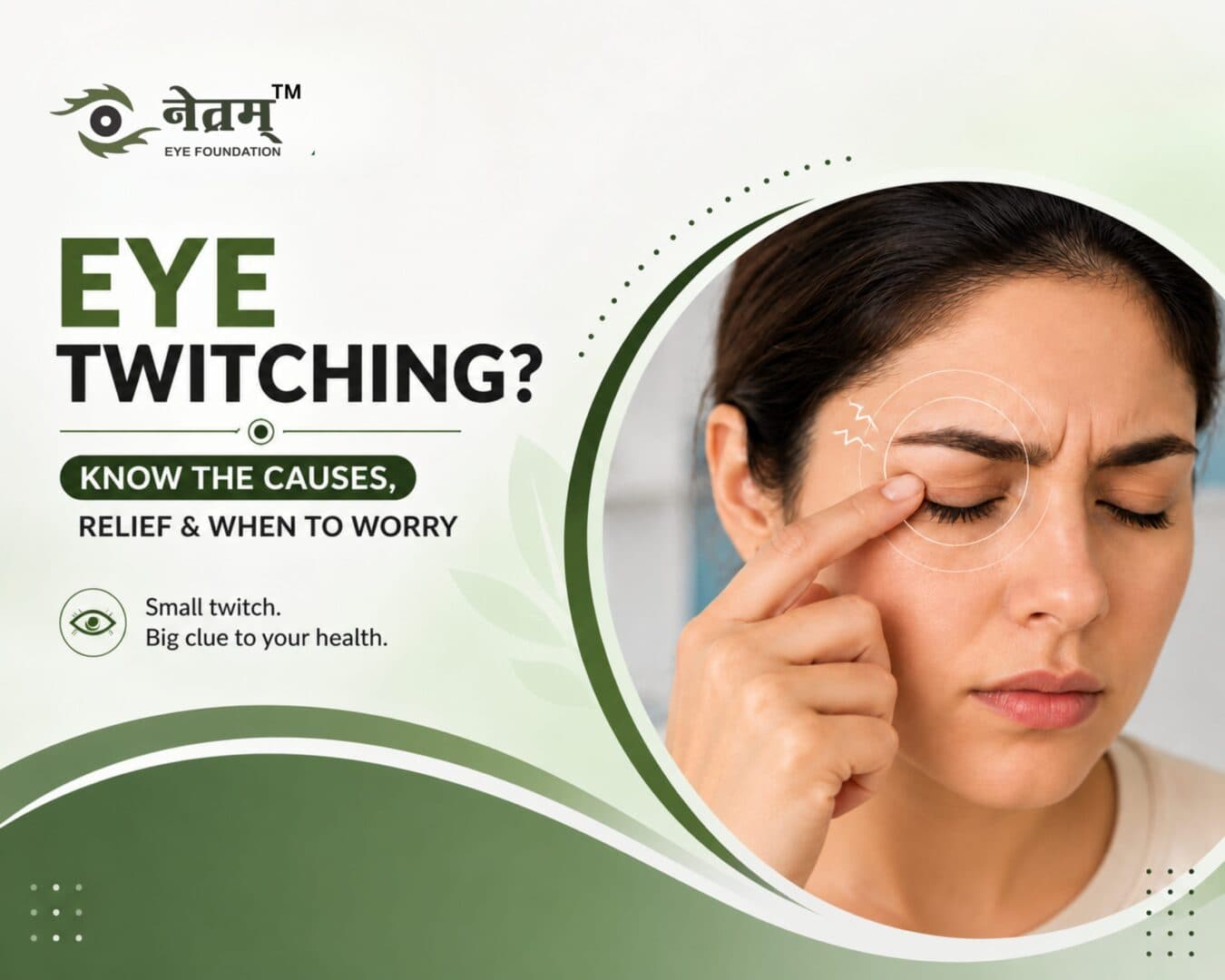
Eye Twitching: Why It Happens and When It’s a Concern
If your eyelid has been fluttering on its own, you’re not alone — eye twitching is one of the most common eye complaints, and the good news is that it is almost always harmless. Most of the time it’s your body’s response to something simple like stress, tiredness, or too much coffee, and it settles on its own. Occasionally, though, persistent twitching can signal something that deserves a closer look. This guide explains why eyes twitch, how to ease it, and the specific warning signs that mean you should see an eye specialist. It is for general information and not a substitute for a consultation.
What Is Eye Twitching?
Eye twitching — known medically as eyelid myokymia — is an involuntary, fine, repetitive contraction of the muscle around the eyelid. It usually:
- Affects one eye at a time, most often the lower lid
- Feels like a gentle flutter or tug you can feel more than others can see
- Comes and goes over seconds, minutes, or on-and-off across a few days
This common type is benign, meaning it does no harm and typically resolves by itself.
Common (and Harmless) Causes
Benign eyelid twitching is usually triggered by everyday lifestyle factors rather than disease. The most frequent culprits are:
- Stress — one of the biggest triggers
- Lack of sleep or fatigue
- Too much caffeine (coffee, tea, energy drinks, cola)
- Eye strain — especially from long hours on screens
- Dry eyes — increasingly common with screen use and air-conditioned or polluted environments
- Alcohol
- Physical exhaustion or overexertion
- Sometimes, low levels of certain nutrients such as magnesium
Notice the pattern: these are mostly things a busy, screen-heavy, under-rested lifestyle produces — which is exactly why eyelid twitching is so common.
How to Stop Eye Twitching: Simple Self-Care
For ordinary twitching, small adjustments usually do the trick:
- Cut back on caffeine for a week or two and see if it improves
- Prioritise sleep — aim for consistent, adequate rest
- Manage stress — even short breaks, walks, or breathing exercises help
- Rest your eyes from screens using the 20-20-20 rule: every 20 minutes, look at something 20 feet away for 20 seconds
- Use lubricating eye drops if your eyes feel dry
- Apply a warm compress to relax the eyelid
- Reduce alcohol
Most twitching eases within a few days to a couple of weeks once the trigger is removed.
When Eye Twitching IS a Concern
This is the part worth remembering. While most twitching is harmless, you should see an eye specialist if you notice any of the following:
- The twitching lasts more than two to three weeks
- It spreads to other parts of your face, not just the eyelid
- Your eyelid closes completely with each twitch, or you struggle to open the eye
- Both eyelids are involved and forcefully clamping shut
- The twitching pulls one whole side of your face
- It’s accompanied by redness, swelling, or discharge from the eye
- Your eyelid is drooping (ptosis)
- There are other symptoms such as facial weakness, double vision, or changes in vision
These features are uncommon, but they help your doctor distinguish ordinary myokymia from conditions that need treatment.
The Less Common Conditions Behind Persistent Twitching
When twitching is forceful, persistent, or spreading, a doctor will consider a few specific (and treatable) conditions:
- Benign essential blepharospasm — increasing, forceful, involuntary closing of both eyes. It is not dangerous but can interfere with daily life and reading.
- Hemifacial spasm — twitching that involves one whole side of the face, often caused by a nerve being irritated by a nearby blood vessel.
Very rarely, ongoing facial twitching can be linked to other neurological conditions — but this is the exception, not the rule, and is usually accompanied by other clear symptoms. For the vast majority of people, a twitchy eyelid is simply a sign to slow down and rest.
How Persistent Twitching Is Treated
If twitching is caused by dry eye or eye strain, treating that underlying problem usually resolves it. For conditions like blepharospasm or hemifacial spasm, the most effective and widely used treatment is small, targeted botulinum toxin (Botox) injections, which calm the overactive muscle and are repeated periodically. An eye specialist will tailor the approach to the cause.
When to See the Team at Netram Eye Foundation
A brief, occasional eyelid flutter rarely needs a doctor. But if your twitching is persistent, spreading, forcing your eye shut, or comes with any of the warning signs above, it’s worth getting checked. At Netram Eye Foundation, a super-speciality eye hospital in Greater Kailash, Delhi, our team can identify the cause — from simple dry eye to the rarer muscle and nerve conditions — and recommend the right treatment.
Book a consultation at our Greater Kailash, Delhi centre if your eye twitching won’t settle.
Frequently Asked Questions
Why is my eye twitching? Most eye twitching is benign eyelid myokymia, triggered by everyday factors like stress, lack of sleep, too much caffeine, eye strain, or dry eyes. It usually resolves on its own once the trigger is addressed.
How do I stop my eye from twitching? Reduce caffeine, get more sleep, manage stress, rest your eyes from screens (the 20-20-20 rule), use lubricating drops if your eyes are dry, and try a warm compress. Most twitching settles within days to a couple of weeks.
When should I worry about eye twitching? See an eye specialist if the twitching lasts more than two to three weeks, spreads across your face, forces your eye shut, affects both eyelids, pulls one whole side of your face, or comes with redness, drooping, double vision, or facial weakness.
Can stress cause eye twitching? Yes. Stress is one of the most common triggers of eyelid twitching, often combined with fatigue and caffeine.
Is eye twitching a sign of a serious problem? Rarely. The large majority of cases are harmless and temporary. Persistent, forceful, or spreading twitching can occasionally indicate conditions like blepharospasm or hemifacial spasm, which are treatable — so it’s worth getting checked if it doesn’t settle.
Can dry eyes cause my eyelid to twitch? Yes. Dry, irritated eyes — common with heavy screen use and dry or polluted air — can trigger eyelid twitching, which often improves once the dryness is treated.
Medically reviewed by Dr Anchal Gupta, Senior Eye Surgeon, Netram Eye Foundation. This article is for general information and is not a substitute for a personalised consultation with a qualified ophthalmologist. If you experience sudden facial weakness, drooping, or vision changes, seek medical care promptly.