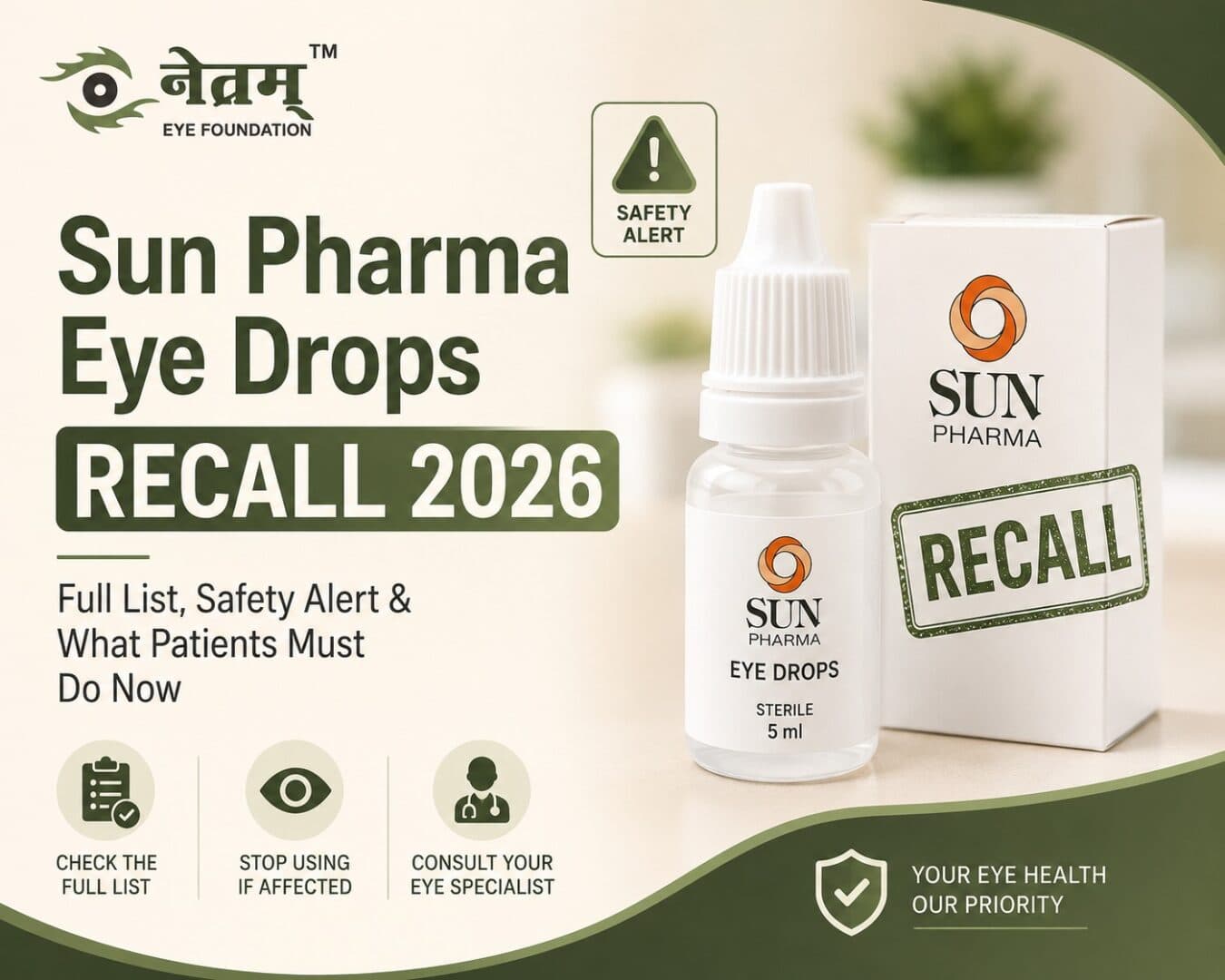
Sun Pharma Eye Drops Recall 2026: Full List, Safety Alert & What Patients Must Do Now
A major health alert has emerged for millions of eye care patients across India. Sun Pharmaceutical Industries Ltd., one of the country’s largest pharmaceutical companies, has initiated a significant voluntary recall of multiple eye drop products due to contamination concerns. This precautionary measure, communicated to distributors in mid-July 2026, has raised serious questions about patient safety and the sterility of ophthalmic medications. If you or a family member use prescription eye drops, it is critical to understand which products are affected, the risks involved, and the safe alternatives available to protect your vision.
Understanding the Sun Pharma Eye Drops Recall Situation
In July 2026, Sun Pharma Distributors Ltd issued a confidential letter to distributors, directing them to immediately cease billing, stop further distribution, and return all existing stocks of specific ophthalmic products across multiple brands. While the company has not publicly detailed the exact nature of the contamination, media reports and expert analysis confirm the recall was prompted by possible contamination at a manufacturing facility.
A Sun Pharma spokesperson emphasized the company’s commitment to safety, stating, “Patient safety remains our highest priority. We have taken all necessary steps in the best interest of patients and in accordance with applicable regulatory requirements. Our teams are working diligently to restore the availability of these products”. The recall is described as a “precautionary measure,” but for patients relying on these medications for post-surgery recovery or chronic conditions, the interruption can have serious consequences.
Complete List of Sun Pharma Eye Drops Recalled
If you have any of the following prescription eye drops, check your bottle immediately. The Sun Pharma eye drops recall affects these products distributed in India:
| Brand Name | Variant/Size |
|---|---|
| Depopred | 2 ml |
| Brinolar | BKC Free |
| Brinzotim | 5 ml, BKC Free |
| Lotepred | 5 ml |
| Lotepred | 1% Eye Drops |
| Lotepred LS | 0.2% Eye Drops |
| Lotepred T | – |
| Nepalact OD | 3 ml |
| Nepalact-Z | – |
| Toba-F | – |
| Nepalact | 5 ml |
Why Were These Sun Pharma Eye Drops Recalled?
The primary driver behind the Sun Pharma eye drops recall is a potential breach in sterility. Eye drops are pharmaceutical products that are instilled directly into a sensitive and vulnerable part of the body. Unlike oral medications that pass through the digestive system, eye drops bypass many of the body’s natural defenses. Maintaining absolute sterility during the manufacturing process is “non-negotiable”.
When contamination occurs, it can introduce harmful microorganisms into the eye. According to experts, recent global recalls highlight that the safety of a product “is determined by not just the active component but the manufacturing process and sterility of the product”. The risk of infection from contaminated eye drops is severe, potentially leading to corneal infections, vision loss, or even life-threatening systemic infections.
What Are These Recalled Eye Drops Used For?
The recalled products are not over-the-counter remedies for dry eyes; they are potent prescription medications used to treat specific, often serious, eye conditions. Patients using these drugs are frequently recovering from surgery or managing chronic diseases.
Nepalact (Nepafenac) and Nepalact-Z/OD
These are part of a range containing nepafenac, a non-steroidal anti-inflammatory drug (NSAID). They are most commonly prescribed to manage pain and inflammation after cataract surgery. They are also used to lower the risk of postoperative macular oedema, particularly in patients with diabetes.
Lotepred (Loteprednol Etabonate) and Lotepred T
This range is a corticosteroid used to reduce inflammation and pain following eye surgery. It is also effective for treating inflammatory eye conditions like allergic conjunctivitis and anterior uveitis. The Lotepred T formulation also contains the antibiotic tobramycin to fight potential bacterial infections while reducing swelling.
Brinolar, Brinzotim, and Depopred
These are used in the management of glaucoma and ocular hypertension. They work by reducing the pressure inside the eye. Interruption of these treatments can lead to dangerous spikes in intraocular pressure, potentially causing irreversible optic nerve damage and vision loss.
Toba-F
This is an antibiotic-steroid combination used to treat or prevent bacterial infections and inflammation, often prescribed after surgery or for bacterial conjunctivitis.
What Patients Must Do During the Sun Pharma Eye Drops Recall
If you have any of the above eye drops, do not panic, but act promptly and safely.
Do Not Self-Discontinue Your Medication
Do not stop using your medication or throw it away without speaking to a doctor. For patients with glaucoma or post-surgical inflammation, stopping abruptly can cause serious harm.
Contact Your Ophthalmologist Immediately
The most important step is to contact your ophthalmologist immediately. Your doctor needs to know that the product has been recalled so they can prescribe a safe and effective alternative. Do not wait for your next scheduled appointment; this requires urgent attention.
Do Not Use the Recalled Product
While you wait to speak with your doctor, do not use the recalled eye drop. Your doctor may instruct you to use a different medication or a preservative-free alternative.
Return the Stock If Instructed
If you purchased the drops recently, your pharmacy or doctor may have specific instructions for returning the product to ensure it is properly disposed of.
Expert Guidance on Safe Alternatives to Sun Pharma Eye Drops
For patients who need immediate guidance on alternative eye care options, Dr. Anchal Gupta, a renowned senior ophthalmologist with over 18 years of experience and Founder of Netram Eye Foundation in Delhi, offers valuable expertise. As a fellowship-trained corneal and refractive surgeon who has performed thousands of successful vision correction procedures, Dr. Gupta emphasizes that patients should never compromise on eye medication safety.
Dr. Anchal Gupta and her team at Netram Eye Foundation advocate for patient-first care and transparent communication. The foundation, established in 2013, has become a trusted destination for thousands of patients seeking safe and precise ophthalmic treatments. Under Dr. Gupta’s leadership, Netram Eye Foundation provides advanced eye care services and helps patients navigate medication safety concerns.
Safe Alternatives to Replace Recalled Sun Pharma Eye Drops
Patients and doctors are now seeking safe alternatives. The market offers several robust options to replace the recalled Sun Pharma products.
For Inflammation and Pain (Replacing Nepalact and Lotepred):
Doctors may prescribe other NSAIDs or corticosteroids. Options include ketorolac tromethamine ophthalmic solution or other branded formulations of nepafenac and loteprednol from different manufacturers. For post-surgical inflammation, products like Durezol (difluprednate) are alternatives.
For Glaucoma (Replacing Brinolar, Brinzotim):
There are numerous prostaglandin analogues (e.g., latanoprost, bimatoprost) and beta-blockers (e.g., timolol) available that can manage intraocular pressure. Your doctor will select the best class based on your specific condition.
For Infections (Replacing Toba-F):
Alternatives include moxifloxacin, gatifloxacin, or chloramphenicol eye drops for bacterial infections. For steroid-antibiotic combos, other fixed-dose combinations exist.
Preservative-Free Options as Safer Alternatives
Recent safety scares have increased interest in preservative-free (PF) eye drops. Preservatives like benzalkonium chloride (BKC) are added to multi-dose bottles to prevent contamination after opening. However, they can have negative effects, including changes to the tear film, allergies, and worsening of dry eye symptoms.
The recalled list notably includes “BKC Free” versions of Brinolar and Brinzotim, indicating a move toward this safer alternative even before the recall. Dr. Anchal Gupta and the specialists at Netram Eye Foundation often recommend preservative-free options for patients with sensitive eyes or those requiring long-term medication use.
Lessons from the 2023 US Eye Drop Recall
This incident echoes the 2023 outbreak in the United States where contaminated artificial tears were linked to multidrug-resistant Pseudomonas aeruginosa infections. That outbreak resulted in severe corneal infections, permanent vision loss, and even deaths. The CDC reported that the incident affected over 80 patients, highlighting how dangerous contaminated eye products can be. The recent Sun Pharma eye drops recall is a reminder that sterility in ophthalmic manufacturing is a matter of life and sight.
Safety Tips for Using Eye Drops Safely
According to ophthalmologists, consumers can take several precautions to minimize contamination risks:
-
Read the label and composition carefully before purchasing
-
Buy eye drops only from trusted pharmacies
-
Wash hands before application
-
Avoid touching the applicator tip to the eye or any surface
-
Never use someone else’s eye drops
-
Check that the safety seal is intact
-
Ensure the solution is clear and free of cloudiness or particles
-
Check the expiry date before use
-
Discard opened multi-dose bottles after one month, even if the expiry date is later
Warning Signs That Require Immediate Medical Attention
Experts advise that certain symptoms should never be ignored. Stop using eye drops and consult an ophthalmologist immediately if you experience:
-
Persistent redness
-
Severe eye pain
-
Blurred vision
-
Sensitivity to light
-
Eye discharge
-
Worsening irritation
As experts emphasize, “Prompt treatment is important since microbial keratitis can advance quickly, and irreversible damage to the vision can occur in a matter of days”. For patients in the Delhi NCR region, Dr. Anchal Gupta at Netram Eye Foundation provides expert consultation for such eye emergencies.
Frequently Asked Questions About the Sun Pharma Eye Drops Recall
Q: What specific eye drops are being recalled by Sun Pharma?
A: Sun Pharma has recalled multiple products including Depopred, Brinolar (BKC Free), Brinzotim, Lotepred (several variants), Nepalact OD, Nepalact-Z, Toba-F, and Nepalact Eye Drops.
Q: Why did Sun Pharma recall these eye drops?
A: The recall is a “precautionary measure” linked to possible contamination at a manufacturing facility. The company has not detailed the exact contaminant, but experts emphasize the crucial importance of sterility in eye medications.
Q: What should I do if I am using a recalled eye drop?
A: Do not stop using the drop without consulting your doctor, as this can harm your condition. Contact your ophthalmologist immediately for a safe replacement. Do not continue using the product once you have contacted your doctor.
Q: Are all eye drops unsafe now?
A: No. Most OTC eye drops are safe when used correctly. The recall is specific to certain prescription products from Sun Pharma. However, experts stress the importance of buying from reliable sources and checking product labels.
Q: What are preservative-free eye drops and why are they better?
A: Preservative-free (PF) eye drops do not contain chemicals like BKC to prevent bacterial growth. They are better for patients with sensitive eyes, dry eye, or those using drops long-term, as preservatives can irritate the eye surface. They often come in single-use units.
Q: Can I switch to an over-the-counter eye drop instead?
A: No. The recalled products are prescription medications for serious conditions like inflammation and glaucoma. You must see a doctor to get a therapeutic equivalent. Do not self-medicate with OTC drops for these conditions.
Q: Where can I find an eye specialist for consultation?
A: You can consult experts like Dr. Anchal Gupta at Netram Eye Foundation in Delhi, which has been rated among the top eye hospitals in Delhi NCR. The foundation provides comprehensive ophthalmic care and can help you find safe alternatives for your eye medications.
Conclusion
The Sun Pharma eye drops recall is a significant event that demands immediate attention from patients and healthcare providers alike. The decision to withdraw products due to suspected contamination underscores a commitment to safety, but it also creates an urgent need for patients to secure alternative treatments. If you are using any of the listed products, contact your ophthalmologist today. Experts like Dr. Anchal Gupta and the team at Netram Eye Foundation emphasize that your vision is too precious to risk. Stay informed, act quickly, and always prioritize safety over convenience when it comes to your eyes.