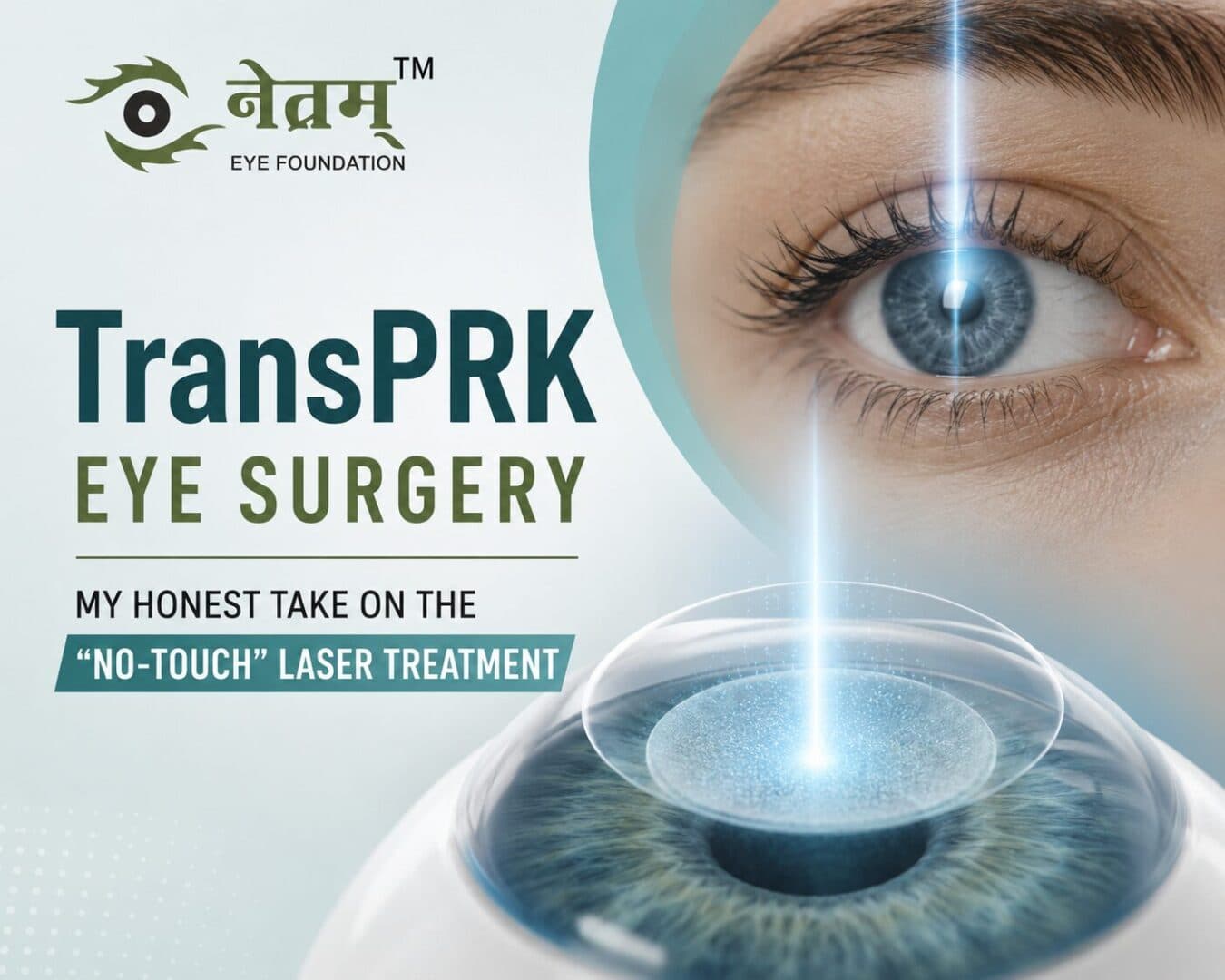
TransPRK Eye Surgery: My Honest Take on the “No-Touch” Laser Treatment
Let me be real with you—when I first heard about TransPRK, I was confused. LASIK I knew. PRK I’d vaguely heard of. But TransPRK? It sounded like some fancy medical acronym that only eye doctors could pronounce.
Turns out, it’s actually pretty simple—and for many people, it might be the safest option out there.
So, if you’re tired of fumbling for your glasses first thing in the morning or dealing with dry, irritated eyes from your contact lenses, stick around. I’m going to break down everything I’ve learned about TransPRK in plain, honest language. No jargon, no fluff—just what you actually need to know.
What Exactly Is TransPRK? (In Plain English)
Okay, so here’s the deal. TransPRK stands for “Transepithelial Photorefractive Keratectomy.” Try saying that five times fast, right?
But here’s what it actually means: it’s a laser eye surgery that fixes your vision without cutting a flap in your eye.
Remember how LASIK works? They create a little hinged flap on your cornea, lift it up, zap the tissue underneath, and put the flap back down. It’s effective, but that flap? It never really heals 100%. It can get dislodged if you rub your eye too hard or take a hit playing sports.
TransPRK takes a completely different approach. Instead of making a flap, the laser gently removes the very top layer of your cornea (the epithelium) and then reshapes the tissue underneath—all in one smooth, continuous step.
And here’s the coolest part: nothing physically touches your eye. No blades. No brushes. No alcohol solutions. Just the laser doing its thing. That’s why they call it “no-touch” or “touchless” surgery.
Why I Think TransPRK Deserves More Attention
Look, I’m not a doctor. But I’ve spent hours reading research papers, talking to people who’ve had the surgery, and digging into what actually makes a difference. And honestly? TransPRK has some serious advantages that LASIK just can’t match.
1. No Flap = No Flap Problems
This is the big one. With LASIK, that corneal flap is always a potential weak point. I’ve heard horror stories of people getting their flap dislodged years after surgery from something as simple as rubbing their eyes.
With TransPRK? That simply can’t happen. There’s nothing to dislodge. Nothing to get infected. Nothing to heal improperly.
If you’re someone who plays sports, works in the military or police force, or just has an active lifestyle where getting hit in the face is a possibility, this is a massive peace-of-mind factor.
2. Better for Thin Corneas
Not everyone has thick enough corneas for LASIK. The surgery requires enough tissue to create a safe flap AND still have enough left over for the correction.
TransPRK doesn’t need a flap at all. So if you’ve been told you’re not a candidate for LASIK because your corneas are too thin, TransPRK might be your answer.
3. Less Dry Eye (Seriously!)
Here’s something that surprised me: LASIK actually cuts through corneal nerves when they create that flap. Those nerves are responsible for telling your eyes to produce tears. When they’re severed, you can end up with chronic dry eye for months or even years.
TransPRK is a surface procedure. It doesn’t cut as deep, so it preserves more of those important nerves. Studies show that TransPRK patients experience significantly less dry eye post-surgery compared to LASIK patients.
If you already struggle with dry eyes (like I do), this is a game-changer.
4. Safer Overall
When you think about it, any time you create a flap, you’re introducing risk. Infection risk. Dislocation risk. Flap wrinkles. Epithelial ingrowth (where cells grow under the flap).
TransPRK eliminates all of that. The entire procedure is done with the laser, start to finish. No instruments touch your eye. For people who are naturally anxious about surgery (and let’s be honest, who isn’t when it comes to their eyes?), this is incredibly reassuring.
The Not-So-Great Stuff: Honest Reality Check
I’m not going to sit here and pretend TransPRK is perfect. It has downsides, and you deserve to know them.
The Recovery Is Longer
This is the trade-off. With LASIK, most people see clearly the next day. With TransPRK, you’re looking at a week or more before your vision is functional, and it can take 1-3 months for your vision to fully stabilize.
During those first few days, you’ll have a protective contact lens on your eye (a bandage lens). Your eyes will feel gritty, watery, and sensitive to light. It’s not agonizing pain—more like having sand in your eye that you can’t remove.
But if you need to get back to work or normal life quickly, this is something to seriously consider.
The First Week Is Rough
The epithelium (that top layer of your cornea) needs time to grow back. It’s like a skinned knee—it just needs a few days. During this time, you’ll be using a lot of eye drops and taking it easy.
Some people find the discomfort more than they expected. It’s manageable with the right medication, but you won’t be at your best. Plan for at least 3-5 days off work, and try to schedule the procedure when you can really rest.
Potential for Regression
This is one area where TransPRK might not be as good as SMILE. A large study from 2026 found that over 1.5 years, TransPRK patients experienced slight myopic regression (meaning their nearsightedness crept back a bit). SMILE showed better long-term stability.
For smaller prescriptions, this probably doesn’t matter much. But if you have high myopia, it’s worth discussing with your surgeon.
The Technology That Makes It All Possible
Not all lasers are created equal. If you’re going to get TransPRK, you want it done with the SCHWIND AMARIS 1050RS. This is the Rolls-Royce of excimer lasers, and here’s why:
It’s Fast. Like, ridiculously fast. The 1050RS fires at 1050 Hz, which means it can treat one diopter of myopia in just 1.3 seconds. For the average patient, the laser part is done in 20-30 seconds.
Faster treatment means less time for your eye to dry out and less chance of you moving during the procedure. It’s just better all around.
It Has 7D Eye Tracking. Most lasers track your eye in 2 or 3 dimensions. The AMARIS tracks in 7. It compensates for every tiny movement—side to side, up and down, rotation, even forward/backward movement. The laser essentially “follows” your eye, making sure every pulse hits exactly where it should.
It’s Insanely Precise. The laser spot size is just 0.54 mm. That’s microscopic. It creates an incredibly smooth corneal surface, which translates to faster healing and clearer vision.
If a clinic is using older technology, the results won’t be the same. The AMARIS 1050RS genuinely makes a difference.
What the Research Actually Says
I’m a numbers person, so I dug into the studies. Here’s what clinical evidence shows:
No Significant Difference in Final Visual Acuity. A 2026 meta-analysis found no major difference in efficacy between TransPRK, LASIK, and SMILE. All three produce excellent results. The difference is in safety, recovery, and side effects.
Faster Healing Than Older Surface Techniques. Compared to traditional “brush PRK,” TransPRK patients heal faster and have less discomfort. The epithelium grows back in about 3-4 days instead of 5-7.
Better Contrast Sensitivity. A 2025 study found TransPRK patients had better contrast sensitivity (especially in low light) compared to SMILE and LASIK. This means potentially sharper night vision.
Lower Higher-Order Aberrations. In the same study, TransPRK produced fewer optical distortions than other techniques, which might mean less glare, halos, and starbursts at night.
Who Is TransPRK Really For?
Based on everything I’ve read and learned, here’s who I think TransPRK is best suited for:
Athletes and Active People – If there’s any chance you’ll get hit in the face, you want a flapless procedure. Period.
Military and Police Personnel – Same logic. Your vision needs to be bulletproof (literally).
Patients with Thin Corneas – If LASIK isn’t an option, TransPRK usually is.
People with Dry Eyes – Because TransPRK preserves more corneal nerves, it’s the better choice if you already deal with dry eye.
Anyone Nervous About Flap Complications – If the idea of a corneal flap freaks you out (and honestly, it should a little), TransPRK is the safer alternative.
Those Who Can Take Time Off – You need at least a week of recovery time. If you’re in a hurry to get back to work, LASIK might be better.
What to Expect: The Timeline
Before Surgery
You’ll have a comprehensive eye exam. They’ll check your prescription, measure your corneal thickness, and make sure you’re healthy enough for surgery.
Stop wearing contact lenses: 7 days for soft lenses, 14 days for hard lenses. Contacts change the shape of your cornea, and you want it to be back to normal before the measurement.
During Surgery
The whole thing takes about 5 minutes per eye. The actual laser part is 20-30 seconds.
You’ll get numbing eye drops—no pain during the procedure. You’ll see a flashing light and hear the laser clicking. That’s it.
Day 1-3
Bandage contact lens on your eye. Feelings of grittiness, light sensitivity, and watering. Use your eye drops religiously.
Plan to stay home. Rest. Listen to podcasts. Have someone bring you food. Don’t drive.
Day 3-5
Bandage lens gets removed. Your epithelium has grown back.
Your vision will likely be hazy and fluctuating. This is normal. Don’t panic.
You can return to work if your job isn’t too demanding, but your vision won’t be perfect yet.
Week 1-2
Vision improves steadily but still fluctuates. Some days are good, some are blurry.
Continue using steroid and antibiotic drops as prescribed.
1-3 Months
This is where the magic happens. Your vision stabilizes. The haze clears. You start seeing what you paid for.
Don’t judge your results before the 3-month mark. Final outcomes take time.
How Much Does It Cost?
TransPRK is a premium procedure, and it comes with a premium price tag. But in my opinion, you’re paying for safety and advanced technology.
| Location / Provider | Cost (Both Eyes) |
| Premier Clinic (Netram Eye Foundation) | ₹90,000 |
| General Range in Delhi | ₹50,000 – ₹85,000 |
| Starting Price (Per Eye) | ₹30,000 |
Pro tip: Don’t choose based solely on price. The technology matters. The surgeon matters. Your eyes are too important to bargain-hunt.
My Final Thoughts
Here’s the bottom line: TransPRK is an incredible option if you value safety, have thin corneas, and can handle a longer recovery. It eliminates the risks of flap complications, causes less dry eye, and produces visual outcomes comparable to LASIK and SMILE.
But it’s not for everyone. If you need to see clearly immediately (like for work), or if you just can’t tolerate a week of discomfort, LASIK or SMILE might be better suited.
The key is having an honest conversation with a qualified surgeon who can assess YOUR eyes and YOUR lifestyle. What works for your friend might not work for you. And that’s okay.
If you’re considering TransPRK, do your research, ask questions, and choose a clinic that uses the best technology available (look for the SCHWIND AMARIS 1050RS).
Your eyes are worth the investment.
Frequently Asked Questions (FAQ)
Q: Does TransPRK hurt?
A: The surgery itself is painless because of numbing drops. Afterward, expect mild to moderate discomfort, grittiness, and light sensitivity for 2-3 days. It’s manageable with medication and rest.
Q: How soon can I see clearly after TransPRK?
A: Functional vision returns within a week, but full stabilization takes 1-3 months. Your vision will fluctuate during this period, so be patient with yourself.
Q: Can I have TransPRK if I have thin corneas?
A: Yes! Unlike LASIK, TransPRK doesn’t require a flap, making it the ideal choice for patients with thinner corneas.
Q: Is TransPRK better than LASIK?
A: It depends on your priorities. TransPRK is safer (no flap complications) and causes less dry eye. LASIK has a faster recovery. Neither is objectively “better”—it’s about what’s right for YOU.
Q: Am I a good candidate for TransPRK?
A: You might be if you have a stable prescription, healthy corneas, and an active lifestyle. Athletes, military personnel, pilots, and anyone with dry eyes are often excellent candidates.
Q: How much does TransPRK cost in India?
A: At premium centers like Netram Eye Foundation, it costs around ₹90,000 for both eyes. Prices range from ₹50,000 to ₹85,000 depending on the clinic and technology used.
Ready to Take the Next Step?
Your vision is one of your most valuable assets. Don’t settle for anything less than the best.
Netram Eye Foundation, led by the experienced Dr. Anchal Gupta, offers TransPRK using the world-class SCHWIND AMARIS 1050RS laser. The team provides transparent, ethical, and patient-centered care—they’ll help you decide whether TransPRK is truly the right fit for you.
Schedule your free consultation today:
📞 +91 9319909455
🌐 https://www.netrameyefoundation.com/